
This blog article is contributed by member institution, the Minnesota Children’s Museum – Kirstin Nielsen’s 3 Tips for Exhibit Development after nearly 25 years of experience.
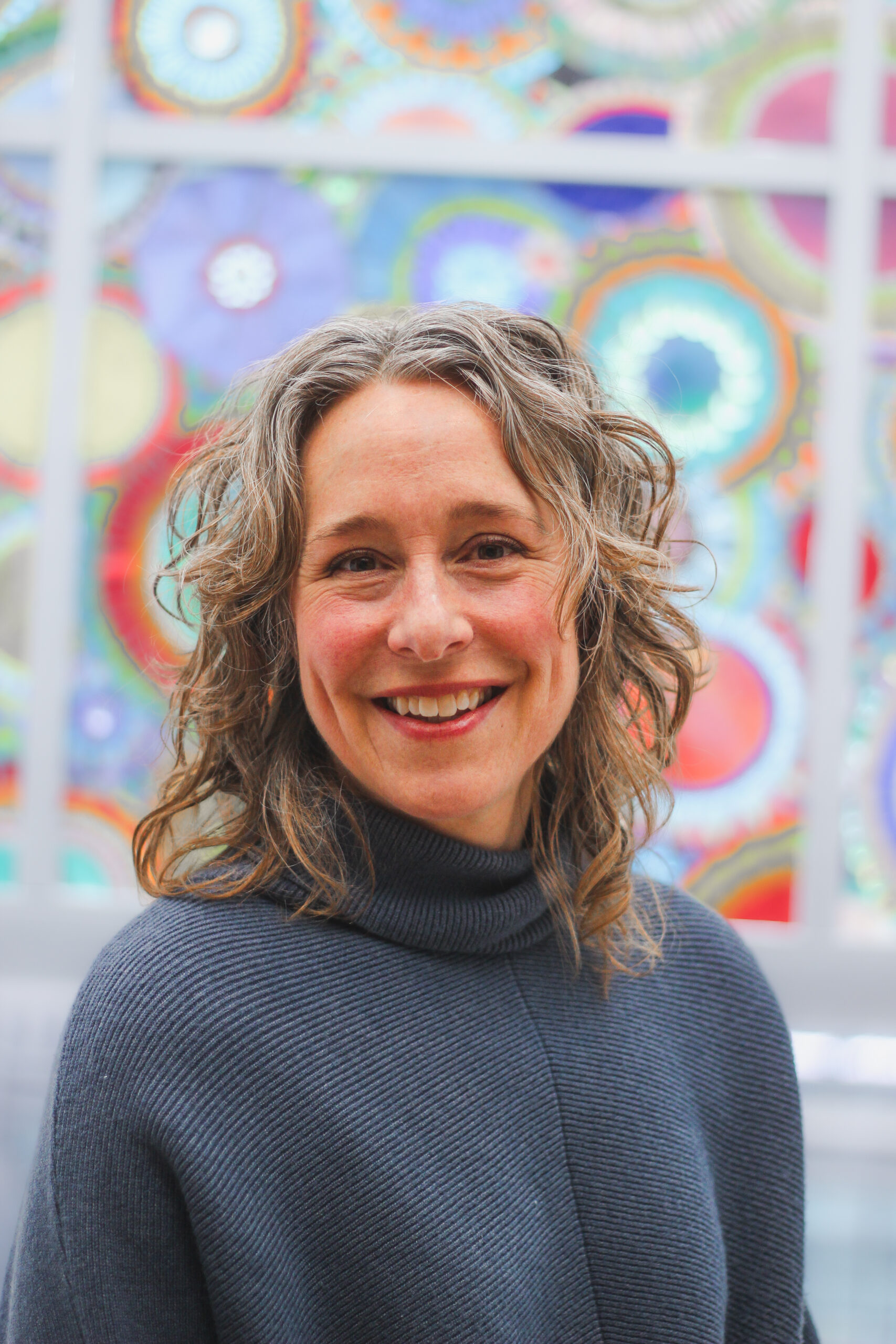 Kirstin Nielsen is a Senior Experience Developer at Minnesota Children’s Museum, where she first began in 1995 as an intern. Since then, she’s been a marketing coordinator, traveling exhibits coordinator and a graphic writer—all before falling in love with exhibit development, which highlights her blend of wonder, out-of-the-box ideas and vision.
Nielsen is known for going out into the world to find inspiration. In 2002, she traveled with a group of four teenagers, who were a part of the museum’s youth volunteer program, to Montana on an expedition to dig for dinosaur bones to inform their developing of a temporary dinosaur exhibit. In 2024, she partnered with the St. Paul Fire Department to gather inspiration and bring new features to the fire station in the pretend-play-focused gallery, Our World, at Minnesota Children’s Museum. In 2025, while researching how to reinvigorate an existing water-focused exhibit, Nielsen lead a council of children and community members on a water discovery, which they described as a shared journey to learn from and inspire one another while exploring new ways to engage with water. This discovery included a water walk led by Ojibwe leader, activist and water walker Sharon Day, a tour of Minnesota’s Capitol Region Watershed District building and creating zines filled with notes and reflections. At the end of each of these experiences, Nielsen had gained connection, hands-on learning and research that felt alive. And one triceratops horn, which sits under her desk.
Nielsen’s process begins with articulating the ‘problem’ that needs to be solved and then generating ideas. When an exhibit isn’t working the way it used to or isn’t engaging visitors as intended, it’s back to the drawing board. She thinks, ‘What could this be instead? How can we adjust this? Where do we go from here?’ This leads to research and experiences to gather input. Finally, the logic-oriented side of Nielsen begins to shine as she thinks through every piece needed to come together to take an exhibit from an idea to reality. Though it’s almost impossible to think through everything, Nielsen takes the time to get pretty close.
Three key tips from Nielsen’s process:
Collaboration
The first necessary piece in Nielsen’s development process is collaboration. From early brainstorming to the finishing details, each stage of development carries a level of teamwork to make the finished product something great. Nielsen loves it when “you’re all huddled around the table with your coworkers and everyone’s bringing their own perspective, their own expertise to it.” She notes how much this process makes her appreciate who she works with. On top of this, she makes it a point to include people in her process outside of coworkers. Children, families and anyone with knowledge in key areas of focus have valuable insight to share.
Hands-on Experiences
While talking to others and inviting them into the development process is important, so is leaving the museum and having hands-on experiences. Listening to someone else’s story takes you far, but going out and living it yourself is different.
For the pretend fire station Our World, solving the problem meant feeling inspired. When the station was due for a refresh, Nielsen and her team took a visit to the Saint Paul Fire Department’s training facility, where the solution revealed itself. They created a training area with an obstacle course-style “confidence course” for the smallest firefighters, along with a pully that allows you to feel the weight of a real firefighter’s suit, because knowing that firefighter equipment is heavy and actually getting to feel how heavy it is, is a big difference.
Being a Core Memory Facilitator
While Nielsen has the research and collaboration down to a science, her favorite part remains watching what she helped create cultivate family memories.
“I’m just sort of obsessed with this idea of like—now we call it—a core memory,” she said.
Nielsen has always had a passion for children and cultivating play, and since becoming a parent, this has just grown. Because of this, a special part for Nielsen is watching the adults who come into the museum getting the opportunity to play as well. When families are having fun together and everyone is enjoying themselves, it makes her happy. Focusing on this drives her process.
“Just that notion that I might be able to help facilitate these people having a moment that could stick,” Nielsen said. “When I walk out there and see people playing together on something that I have had any hand in…that is still the most rewarding thing for me.”