
Contributed by Marnie Louis, Research & Education Specialist at AMM member company RGI Creative
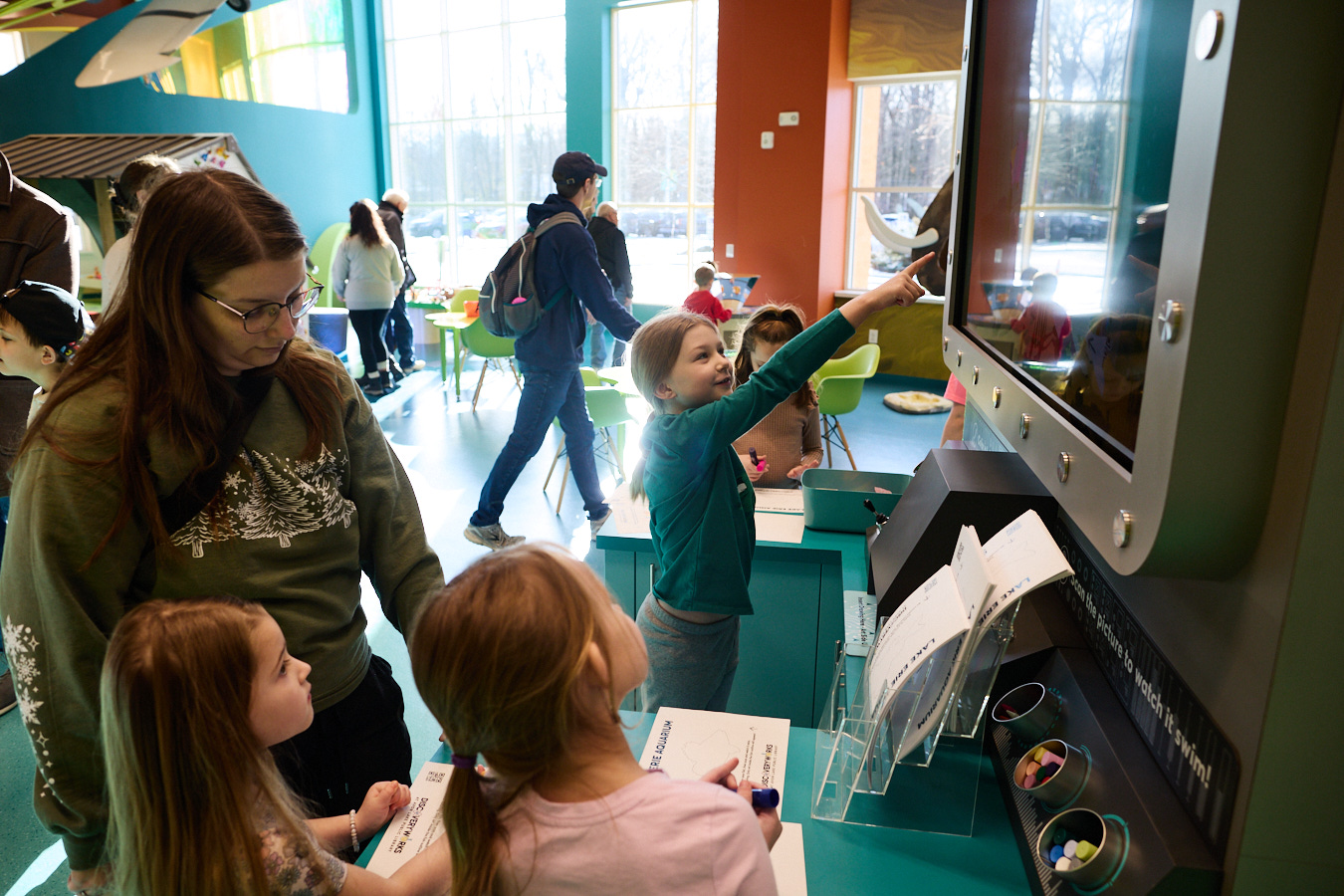
A cozy moment with your child exploring new worlds designed to ignite imagination and spark curiosity—there’s no better kind of museum exhibit. Children are among our favorite audiences. Innately curious and fearlessly imaginative, they approach exhibits in ways an adult mind may not readily experience. As designers, we delight in creating opportunities for children to explore, think critically, and become active participants. At the same time, we recognize our responsibility to create exhibits that not only fascinate the child but also engage and empower the adults in their lives.
Museums are places of trust. Families visit them expecting meaningful experiences grounded in knowledge, curiosity, and discovery. Children often arrive with parents, grandparents, caregivers, or other trusted adults, creating opportunities for shared learning that extend far beyond the exhibit itself. As exhibit designers, we have the privilege—and the responsibility—to create environments that inspire those conversations and strengthen those connections.
At RGI Creative, that responsibility became especially meaningful when we were selected to redesign DiscoveryWorks, a thirty-year-old science center within the Avon Lake Public Library. The project presented an exciting opportunity, along with a unique challenge: preserve a beloved community destination while creating new science-based experiences that would engage future generations.
Success meant designing for everyone who would encounter the space—from inquisitive two-year-olds to independent twelve-year-olds and the adults accompanying them. The redesigned environment needed to honor local traditions and community pride while introducing immersive, sensory-rich experiences that encouraged exploration, supported science education, and remained accessible to visitors of all ages and abilities.
Our goal was not simply to design exhibits people would enjoy during their visit. We wanted to create experiences that encouraged children and caregivers to learn together and continue those conversations long after leaving the museum.
Before any concepts were developed, we spent months getting to know the DiscoveryWorks team and the community they served. We conducted interviews, analyzed community survey data, photographed and documented every interactive, and asked both staff and community members which exhibits held the greatest meaning. We listened carefully, discussed recurring themes, and synthesized what we learned into design opportunities.
This research became the foundation for every decision that followed. Rather than designing around assumptions, we designed around authentic community voices. The process helped us understand not only what families enjoyed, but why those experiences mattered and how they could be strengthened.
Another valuable tool was the development of visitor personas. Using the information we collected, we created representative profiles of both children and the adults who typically visited DiscoveryWorks. Considering their ages, backgrounds, lifestyles, and interests helped us think more intentionally about how each exhibit would be experienced. Personas also helped us identify opportunities where children and caregivers could naturally interact, creating meaningful moments of shared discovery.
User experience prototyping proved equally important. Throughout the design process, prototypes allowed us to determine whether our ideas truly resonated with visitors before final fabrication. One example was the Underwater Art Aquarium, an interactive where children create fish that come to life on a large digital aquarium. We knew children would enjoy coloring, but we also wanted the experience to invite caregivers to participate. Parents and grandparents often sat beside children, talking about local fish species, Lake Erie, and aquatic life while creating colorful perch and walleye together.
Throughout this project, we were reminded that one of the greatest gifts museums can provide is the opportunity for adults to teach children. Those shared moments benefit everyone. Children satisfy their natural curiosity while learning from someone they trust, and adults experience the satisfaction of passing along new knowledge. Museums create an environment where caregivers become active participants rather than observers, strengthening both learning and relationships.
The aquarium also demonstrated the value of continuous evaluation. Like every DiscoveryWorks exhibit, it was tested through multiple rounds of prototyping—from simple cardboard models to three-dimensional prototypes and eventually the finished installation.
Once installed, observations quickly revealed something we had not anticipated. While visitors loved the activity, the coloring materials created unexpected maintenance issues. Marker caps disappeared, surfaces became stained, and keeping the exhibit functioning as intended became increasingly difficult.
Instead of accepting those limitations, we revisited the design. We replaced traditional coloring with colorful geometric pieces that children could arrange inside fish templates. The redesign unexpectedly transformed the experience. Children began experimenting with shapes, patterns, and spatial reasoning. When letter pieces were introduced, many started spelling their names or identifying different fish species, naturally incorporating early literacy into the activity. What began as an art experience evolved into one that also supported mathematics, language development, creativity, and collaborative problem-solving.
Most importantly, conversations between children and caregivers continued. Families worked together, asked questions, and celebrated each creation as it appeared swimming across the digital aquarium.
Would we have discovered these improvements without user experience prototyping? Perhaps eventually—but certainly not before visitors experienced unnecessary frustration. By observing, listening, and remaining open to change, we were able to strengthen both the exhibit and the visitor experience before those challenges became lasting problems.
That willingness to evaluate is something we believe should continue throughout every phase of exhibit design. During research, concept development, prototyping, fabrication, installation, and beyond, we continually ask ourselves whether an experience is accomplishing what we intended. Observation, feedback, and thoughtful analysis help us refine our work and better serve the audiences for whom we design.
No concept is so perfect that it cannot benefit from honest evaluation. An exhibit may look wonderful on paper or in renderings, yet function differently once real families begin interacting with it. Remaining adaptable and responsive allows us to create experiences that truly meet visitors’ needs while honoring the goals of our clients and the communities they serve.
Ultimately, our exhibits are experienced for only a short time within museum walls, but we hope their impact extends far beyond a single visit. We hope families continue talking as they drive home, notice the natural world differently, return to local parks and beaches with fresh curiosity, or seek out new places to learn together. Those moments represent the true success of an exhibit—not simply what visitors remember seeing, but how the experience influences what they do next.
As museums reflect on the truths they hold and the trust placed in them by their communities, exhibit designers share in that responsibility. Every design decision shapes how visitors experience information, connect with one another, and create lasting memories. At its best, thoughtful exhibit design does more than communicate knowledge. It inspires curiosity, strengthens relationships, and creates meaningful experiences that continue long after visitors leave the museum.